
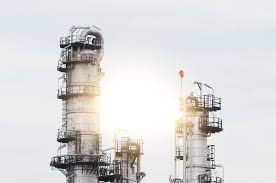
Exchanger Inspection in Findlay, OH
From Findlay, TechCorr mobilizes exchanger inspection specialists across the I-75 and US-30 industrial corridor, supporting Ohio refineries, power generation, and manufacturers. Our non-destructive testing (NDT) and NDE methods assess tube condition without compromising serviceable equipment.
Exchanger Inspection for Findlay’s Industrial Corridor
In northwest Ohio, reliable heat-transfer equipment supports refining, manufacturing, power generation, and the pipelines connecting regional processing operations. Condensers, feed-water heaters, boilers, and air coolers can lose efficiency or develop tube damage from corrosion, erosion, vibration, deposits, and operating conditions. A localized defect may affect performance, increase leakage risk, or lead to unplanned downtime if it goes undetected.
TechCorr serves facilities from Findlay and across the Buckeye State’s refining and pipeline network. Exchanger inspection adds detailed tube-condition data to an asset integrity program, helping plant managers and integrity engineers evaluate equipment condition, prioritize maintenance, and plan outages using evidence rather than assumptions. The right inspection scope depends on tube material, geometry, access, service history, and the damage mechanisms most likely for the equipment.
What TechCorr’s Findlay Team Delivers
TechCorr’s tube inspection specialists evaluate ferrous and nonferrous tubing across heat exchangers and related heat-transfer equipment. Depending on the application and tube condition, methods may include eddy current testing, remote field testing (RFT), Internal Rotary Inspection System (IRIS) ultrasonic testing, magnetic flux leakage, near-field testing, and remote visual examination. Method selection is based on the inspection objective and the material and configuration being examined; no single technique is appropriate for every tube bundle.
Inspection results can be analyzed at the job site or transferred through a web portal for remote review. Enhanced visualization and reporting tools organize findings against the tube-sheet layout, helping users locate indications by tube and, where supported by the inspection method and data, along the tube length. This gives maintenance teams clearer information for follow-up examination, repair or plugging decisions, retubing assessments, and operating adjustments. TechCorr’s Findlay strengths in conventional NDE, storage tank inspection, and pipeline NDE complement this specialized tube-inspection capability when broader asset integrity needs arise.
How Exchanger Inspection Works as NDT
Exchanger inspection is a form of non-destructive testing (NDT), also called non-destructive examination (NDE): it gathers information about material condition without requiring the inspected tube to be cut apart. Techniques use different physical principles to identify or characterize changes associated with flaws, wall loss, or other relevant conditions. Eddy current is commonly applied to conductive tubing, while RFT can be useful for ferromagnetic materials. IRIS uses ultrasonic measurements to assess remaining wall thickness; other methods, including magnetic flux leakage, near-field testing, and remote visual examination, may suit particular materials or inspection questions.
NDT findings are not a substitute for engineering judgment. Their meaning depends on method capabilities, calibration, tube material, signal quality, access, and applicable acceptance criteria. Qualified personnel interpret the data in context and communicate limitations alongside results. Clear tube mapping and reporting help the owner connect examination findings to equipment history and make informed decisions about additional assessment, repair, replacement, or continued operation.
Standards, Qualifications, and Inspection Planning
Exchanger tube examinations should be planned around the equipment’s design, service, and governing inspection program. API 510 addresses pressure-vessel inspection, repair, alteration, and rerating, while API 570 applies to in-service piping systems; API 653 covers aboveground storage tanks. These standards are relevant to broader plant integrity programs, but they do not replace an exchanger-specific inspection plan or automatically define tube examination requirements. The owner and responsible inspection personnel should establish the applicable code, scope, and acceptance criteria for each asset.
Personnel qualification matters because tube data requires method-specific acquisition and interpretation. TechCorr performs NDE with trained personnel working in accordance with applicable American Society for Nondestructive Testing (ASNT) qualification practices and project requirements. NACE/AMPP corrosion expertise can inform damage-mechanism considerations, while relevant ISO standards may support quality management, competence, or examination procedures when specified by the contract or owner. Standards and qualification requirements vary by project; scope confirmation before mobilization helps align access, methods, documentation, and reporting expectations.
Why TechCorr Findlay
TechCorr combines Findlay-area responsiveness with experience serving Midwest refining, pipeline, power, and manufacturing operations. The office’s conventional NDE, API 653 storage tank inspection, and pipeline NDE strengths provide useful regional context, while specialized exchanger methods address the distinct needs of tube bundles and heat-transfer equipment. That combination supports coordinated planning without treating every asset or damage mechanism alike.
Planning an outage or investigating exchanger performance? Contact TechCorr to discuss the equipment, tube materials, inspection history, access constraints, and decision you need the examination to support. We can help define a practical NDT scope, coordinate qualified personnel, and deliver organized findings to inform your asset integrity decisions in Findlay and throughout Ohio.
Why Findlay Chooses TechCorr for Exchanger Inspection
- Findlay mobilization across Ohio’s refining and pipeline corridor
- Tube expertise spanning ferrous and nonferrous materials
- Eddy current, RFT, IRIS, MFL, near-field, and visual methods
- Tube-sheet reporting supports precise follow-up decisions
- Conventional NDE and API 653 strengths complement tube inspection
Exchanger Inspection in Other Cities
Your Local Office
215 D Stanford Parkway, Findlay, OH 45840