
Ultrasonic Thickness Testing (UTT) in Houma, LA
From Houma, TechCorr supports corrosion monitoring along the Bayou and Gulf Coast industrial corridor, from shipyards and terminals to offshore platforms. Ultrasonic Thickness Testing (UTT) uses non-destructive testing (NDT) and NDE principles to measure remaining wall thickness without cutting into operating assets.
Thickness Data for Gulf Coast Asset Integrity
In Southeast Louisiana, marine exposure, wet process service, changing temperatures, and corrosive environments can make wall loss a persistent integrity concern. Shipyards, terminals, storage tanks, pipelines, and offshore facilities need reliable thickness data to understand corrosion or erosion before it becomes a leak, unplanned outage, or repair emergency.
TechCorr's Houma office serves the bayou-to-deepwater operating area, supporting inspection needs for marine and offshore operators as well as facilities across the regional industrial corridor. Ultrasonic Thickness Testing (UTT) helps integrity teams establish baseline readings, compare measurements over time, and identify areas that may require further evaluation. The resulting data can support remaining-life calculations and help prioritize maintenance or replacement across piping, pressure vessels, and tanks.
How Ultrasonic Thickness Testing Works
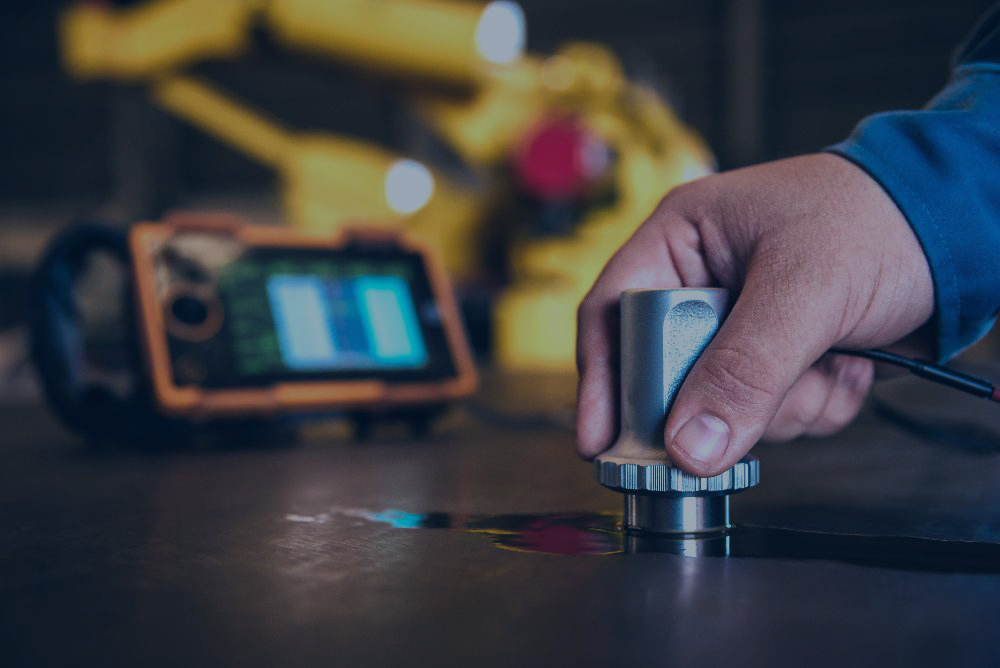
UTT is a non-destructive testing and inspection method based on the transmission and return of high-frequency sound waves. A technician applies a couplant between the probe and the prepared material surface. The instrument measures the time required for the sound pulse to travel through the material and return from the opposite wall, then calculates thickness using the material's acoustic velocity.
Because the method does not require cutting out a sample, it can provide measurements while preserving the component. A suitable probe, instrument setup, surface condition, and material velocity are essential to dependable readings. Coatings, roughness, geometry, temperature, and access can affect the measurement, so the inspection approach and any preparation requirements should be selected for the specific asset and application.
UTT is commonly used to check accessible measurement locations on piping, vessels, and tank components. When readings are repeated at identified locations, teams can compare results with prior data and assess thickness trends. It is important to interpret measurements in context: a thickness reading is a point-in-time result, and coverage, measurement location, acceptance criteria, and follow-up actions should reflect the applicable inspection plan and engineering requirements.
What TechCorr's Houma Team Delivers
TechCorr coordinates UTT to fit the asset, access conditions, and inspection objective. Work may include defined thickness measurement locations, field readings, documentation of results, and comparison with available baseline or historical information. The deliverable can help plant managers and integrity engineers identify areas for review, direct additional inspection, and make informed decisions about repair, monitoring, or replacement.
The Houma office's marine inspection, storage tank inspection, radiographic testing, and pipeline NDE strengths complement thickness measurement across connected assets and operating environments. This local capability is relevant when inspection planning spans vessels, tankage, piping systems, terminals, shipyards, or offshore facilities. Where appropriate, UTT findings can inform a broader NDT or NDE program; they do not replace other examination methods or an engineering assessment when those are needed.
Before mobilization, TechCorr can coordinate scope, access, surface condition, operating constraints, and reporting expectations with the site team. Clear planning helps ensure readings address the questions that matter to asset integrity and supports practical use of the results in inspection records and maintenance planning.
Standards, Personnel, and Inspection Planning
Inspection requirements depend on the asset, service, governing code, owner-user program, and the scope of work. API 510 addresses in-service inspection, rating, repair, and alteration of pressure vessels; API 570 covers in-service inspection, rating, repair, and alteration of piping systems; and API 653 applies to inspection, repair, alteration, and reconstruction of aboveground storage tanks. These standards provide relevant frameworks for inspection programs, but a UTT scope should be established against the applicable requirements rather than treated as a universal checklist.
Personnel qualification and examination practice also matter. ASNT guidance and certification programs are commonly referenced in NDT personnel qualification, while employers and clients may apply their own written practices and qualification requirements. NACE/AMPP resources address corrosion prevention and control, supporting the wider corrosion-management context for thickness monitoring. ISO standards may also be relevant to quality systems, inspection processes, or personnel qualification depending on the contract and application.
TechCorr can align the inspection scope and documentation with project specifications and applicable owner or code requirements. Confirming the governing documents, personnel qualifications, measurement procedures, and reporting format before work begins helps make the NDE results consistent, traceable, and useful for future comparisons.
Why TechCorr Houma
TechCorr's Houma team brings local knowledge of Gulf of Mexico marine and offshore operations together with inspection support for storage tanks, terminals, and pipeline systems across Southeast Louisiana. That regional context helps shape UTT planning around real access, operating, and coordination needs—not just a list of measurement points.
For plant managers and integrity engineers, timely thickness information can strengthen asset integrity planning and help focus attention where wall loss warrants action. Contact TechCorr to discuss Ultrasonic Thickness Testing (UTT) in Houma, LA, your asset types, inspection objectives, access requirements, and the standards or owner specifications governing your program. We can help define a practical scope and coordinate the inspection support your team needs.
Why Houma Chooses TechCorr for Ultrasonic Thickness Testing (UTT)
- Houma-based support for bayou, Gulf Coast, and offshore assets
- UTT aligned with marine, tank, and pipeline inspection needs
- NDT and NDE methods coordinated across complementary services
- Scope and reporting planned around applicable codes and owner requirements