
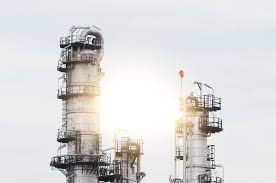
UAV Drone Inspection in Findlay, OH
From Findlay, TechCorr mobilizes UAV Drone Inspection across the I-75 and US-30 industrial corridor, serving Ohio refineries, pipeline assets, and manufacturing plants. Drone visual examination is a non-destructive testing (NDT) method that helps assess hard-to-reach equipment while limiting work at height and confined-space exposure.
UAV Drone Inspection for Findlay’s Industrial Corridor
Findlay sits at a practical crossroads for Ohio’s refining, manufacturing, and pipeline operations. Facilities and linear assets across the I-75 and US-30 corridors face ongoing demands to monitor equipment condition, plan maintenance, and manage inspection risk without creating unnecessary downtime. Elevated structures, tanks, vessels, and difficult-to-access areas can make conventional visual examinations time-consuming and expose personnel to work-at-height or access hazards.
TechCorr’s UAV Drone Inspection service gives integrity teams another way to collect visual condition information. FAA-licensed commercial drone operations can support in-service or out-of-service inspection planning, subject to site conditions, operating requirements, and asset configuration. For Findlay-area operators, the service complements conventional NDE, storage tank inspection, and pipeline NDE capabilities available through TechCorr’s Ohio operations.
How UAV Inspection Works as an NDT Method
UAV inspection is a visual examination approach within the broader practice of non-destructive testing and examination. A qualified pilot maneuvers a drone equipped with imaging equipment to capture views of accessible asset surfaces without cutting, removing, or otherwise damaging the material being examined. The resulting images and observations can help identify visible conditions such as coating deterioration, corrosion indications, deformation, damaged components, or other areas that warrant closer assessment.
Drone visual inspection does not replace every required examination or establish the condition of material hidden beneath coatings or behind obstructions. It is one NDT/NDE tool used to improve access, document visible conditions, and inform decisions about follow-up inspection. Where indications require confirmation or additional characterization, TechCorr can help coordinate suitable conventional NDE methods and inspection expertise. Scope, access, lighting, visibility, atmospheric conditions, and operating restrictions all influence what can be examined and reported.
What TechCorr’s Findlay Team Can Deliver
TechCorr provides UAV visual inspection support for mission-critical assets and infrastructure. Depending on the asset, inspection scope, and safe operating conditions, applications can include:
- External examinations: Aerial visual review of flare stacks, smokestacks, cooling towers, elevated structures, and other hard-to-reach exterior surfaces.
- Internal examinations: Fly-through visual inspection of suitable storage tanks, pressure vessels, and confined spaces, potentially reducing the need for personnel entry or extensive scaffolding. Feasibility depends on the space, atmosphere, geometry, and approved operating plan.
- Pipeline and facility support: Visual assessment of accessible pipeline-related structures and processing-facility equipment, complementing TechCorr’s pipeline NDE and conventional NDE services.
- Underwater applications: Remotely operated vehicle (ROV) inspection may be considered for appropriate subsea pipelines, risers, and offshore structures; this capability is distinct from aerial UAV operations and depends on project scope and conditions.
Before mobilization, the team can discuss the inspection objective, asset location, site hazards, operating status, access constraints, and any required permits or coordination. The goal is to define a practical examination plan and deliver useful visual information for maintenance and asset integrity decisions—not to promise access or findings that site conditions cannot support.
Standards, Qualifications, and Inspection Planning
Inspection requirements depend on asset type, applicable codes, owner-user programs, and the purpose of the examination. API 510, API 570, and API 653 address inspection and integrity requirements for pressure vessels, piping systems, and aboveground storage tanks, respectively. UAV-collected visual information may support an inspection program, but a drone flight alone does not constitute code compliance or replace the required inspection scope, qualified personnel, or other examinations specified by the governing program.
TechCorr’s broader NDT and NDE capabilities can help asset owners determine when visual observations should be paired with additional examination. Personnel qualifications and method selection should align with the applicable ASNT-based qualification program and project requirements. Where corrosion control, coatings, or materials performance are relevant, NACE/AMPP practices may also inform inspection planning. ISO standards can apply to quality management and inspection processes depending on the work scope and client requirements. The governing documents and acceptance criteria should be confirmed for each project rather than assumed to apply universally.
Supporting Asset Integrity Without Unnecessary Exposure
A well-planned UAV examination can help maintenance and integrity teams gain visual access to selected areas before committing to scaffolding, rope access, or other access arrangements. It can also produce photographic records that support condition tracking and prioritization when used consistently and interpreted in context. This can be particularly useful when scheduling inspections around production needs or evaluating elevated structures and internal spaces where access carries additional risk.
Drone inspection is not a substitute for sound inspection engineering. Findings must be evaluated against the asset’s history, operating conditions, damage mechanisms, and inspection program. When the visual examination identifies a concern—or when the asset’s risk profile requires more than visual coverage—TechCorr can help determine an appropriate next step through its conventional NDE, tank inspection, and pipeline inspection services.
Why TechCorr Findlay
TechCorr serves Ohio’s refining, pipeline, and manufacturing sectors from Findlay, with strengths in conventional NDE, API 653 storage tank inspection, and pipeline NDE. That local inspection depth gives plant managers and integrity engineers a practical point of contact for connecting UAV visual examination with broader non-destructive testing needs. TechCorr’s team can mobilize across Ohio’s pipeline network and processing facilities, helping coordinate inspection support around asset priorities and site conditions.
Planning a UAV Drone Inspection in Findlay, OH? Contact TechCorr to discuss your asset, inspection objective, access constraints, and applicable inspection requirements. We’ll help assess whether drone-based visual examination fits the scope and how it can support your wider NDT/NDE and asset integrity program.
Why Findlay Chooses TechCorr for UAV Drone Inspection
- Findlay mobilization across Ohio’s pipeline and processing network
- UAV visual inspection backed by conventional NDE capabilities
- Storage tank API 653 and pipeline NDE expertise
- Inspection planning aligned with asset scope and applicable standards
UAV Drone Inspection in Other Cities
Your Local Office
215 D Stanford Parkway, Findlay, OH 45840