
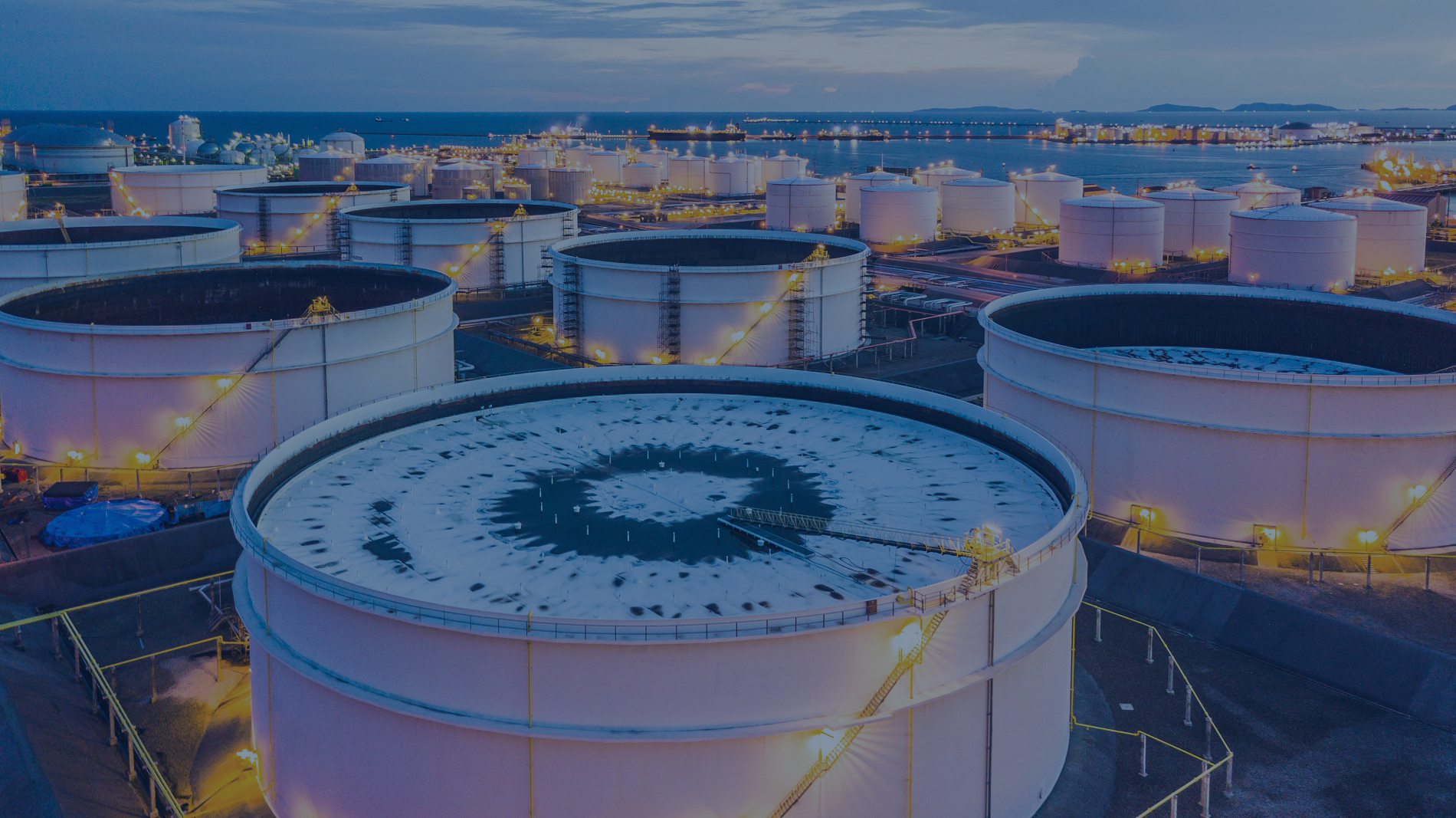
Storage Tank Inspection in Warner, OK
From Warner, TechCorr mobilizes storage-tank inspection crews across the Arkoma Basin and Mid-Continent refining corridor. Our non-destructive testing (NDT) and NDE methods assess floors, shells, and roofs in service or during outages—helping Oklahoma operators make informed integrity decisions.
Storage Tank Inspection for Oklahoma Operations
Aboveground storage tanks support crude oil, refined products, produced water, and process operations across Oklahoma. Their floors, shells, roofs, and foundations face corrosion, settlement, and operating stresses that can affect containment and availability. For operators in the Arkoma Basin and the wider Mid-Continent refining and pipeline corridor, timely inspection helps identify deterioration before it becomes an unplanned outage, repair, or release.
TechCorr’s Warner office supports Oklahoma pipeline and refining operators with pipeline NDE, conventional NDE, and rope access. That regional capability provides a practical base for coordinating tank work alongside broader inspection needs. Plant managers and integrity engineers can use inspection findings to prioritize repairs, plan outage scope, and maintain a defensible asset integrity program—without treating every tank as a one-size-fits-all assignment.
Storage Tank Inspection as Non-Destructive Testing
Storage Tank Inspection combines visual examination, measurement, and targeted NDT to evaluate condition without unnecessarily damaging the asset. For in-service work, qualified inspectors can assess accessible surfaces and use suitable examination methods to identify conditions that warrant monitoring or further evaluation. For out-of-service inspections, access to the tank interior supports more extensive examination of the floor, shell, and roof.
Ultrasonic testing (UT) measures material thickness and can map corrosion across selected areas. Magnetic Flux Leakage (MFL) testing screens tank floors for indications associated with metal loss; UT prove-up can then help establish the dimensions and character of selected indications. These methods complement visual inspection rather than replace engineering judgment. Their application depends on tank configuration, surface condition, access, inspection objectives, and applicable procedures.
The result is a condition assessment grounded in non-destructive testing and NDE evidence. Findings help owners understand where damage is indicated, what additional evaluation may be appropriate, and how results relate to operating and inspection requirements. Where suitable, Acoustic Emission (AE) and TANKPAC™ testing can contribute to condition assessment while a tank remains in service; suitability and scope should be established for the specific asset.
What TechCorr’s Warner Team Delivers
TechCorr can coordinate in-service and out-of-service visual inspections, UT thickness readings, and UT corrosion surveys of tank shells and roofs. For tank floors, MFL screening can identify indications for further assessment, with UT prove-up used to support volumetric evaluation. Inspection scope may also include API 653 calculations and evaluations of shell and edge settlement and tank verticality, as appropriate to the project.
A useful inspection program starts with the decision the owner needs to make. TechCorr works with the operator to define objectives, access, operating constraints, and the required examination scope. Whether the priority is a planned internal inspection, an in-service assessment, or engineering support for a repair or continued-service decision, the approach should connect field data to a clear integrity question.
Deliverables are organized into an electronic report that can include findings and recommendations, calculations, applicable API checklist items, CAD drawings, and photographs. Clear documentation helps teams review indications, compare current results with available history, plan follow-up, and communicate decisions across inspection, maintenance, and engineering groups. The final scope and report contents are tailored to the asset and work performed.
Standards, Qualifications, and Defensible Decisions
API Standard 653 is central to inspection, repair, alteration, and reconstruction considerations for aboveground storage tanks. API 510 and API 570 address pressure vessels and piping rather than storage tanks, but they may be relevant to a facility’s wider mechanical-integrity program and connected equipment. Applicable requirements depend on the asset, jurisdiction, owner procedures, and inspection purpose; they should be confirmed during planning.
Inspection personnel and procedures should be appropriate to the NDT methods used. ASNT qualification and employer-based certification practices may inform personnel qualification, while applicable written practice, procedure, and project requirements govern how work is performed. NACE/AMPP corrosion expertise can support corrosion-related assessment and mitigation considerations. ISO standards may apply to quality-management or testing-system requirements when specified by the owner or contract. These frameworks are not interchangeable: the inspection plan should identify which standards and qualification requirements apply to each task.
Plan Around Access, Operations, and Risk
Tank inspection schedules are shaped by service history, known damage, operating conditions, access, and the owner’s maintenance strategy. Early coordination helps determine whether work can be completed in service or requires an outage, what surfaces must be made accessible, and which NDT methods can answer the inspection questions. For out-of-service work, cleaning, ventilation, confined-space controls, and safe access must be managed under the facility’s procedures. Rope access capability can support inspection needs at elevated or difficult-to-reach areas when the work plan and site conditions allow.
Inspection data is most valuable when it is reviewed in context. Comparing current readings and indications with prior records can help reveal changes, while calculations and engineering evaluation support decisions about repair, monitoring, or further examination. TechCorr’s role is to provide technically grounded inspection evidence and reporting that supports the owner’s asset integrity process—not to replace the operator’s responsibility for safe operation and final decisions.
Why TechCorr Warner
TechCorr brings storage-tank inspection capabilities together with the Warner office’s regional strengths in pipeline NDE, conventional NDE, and rope access. Crews mobilize to support operators across the Arkoma Basin and Mid-Continent, with scope built around the tank, operating constraints, and the questions your integrity team needs answered. The result is coordinated NDT and NDE support designed to help keep critical assets inspected and in service.
Contact TechCorr to discuss your tank inventory, inspection history, operating window, and reporting needs. We can help define an appropriate inspection scope and coordinate field execution for your next in-service assessment or out-of-service inspection.
Why Warner Chooses TechCorr for Storage Tank Inspection
- Warner-based mobilization across the Arkoma Basin and Mid-Continent
- MFL floor screening with UT prove-up for selected indications
- In-service and out-of-service tank inspection capabilities
- Pipeline NDE, conventional NDE, and rope access support
- Electronic reports with findings, calculations, drawings, and photos