
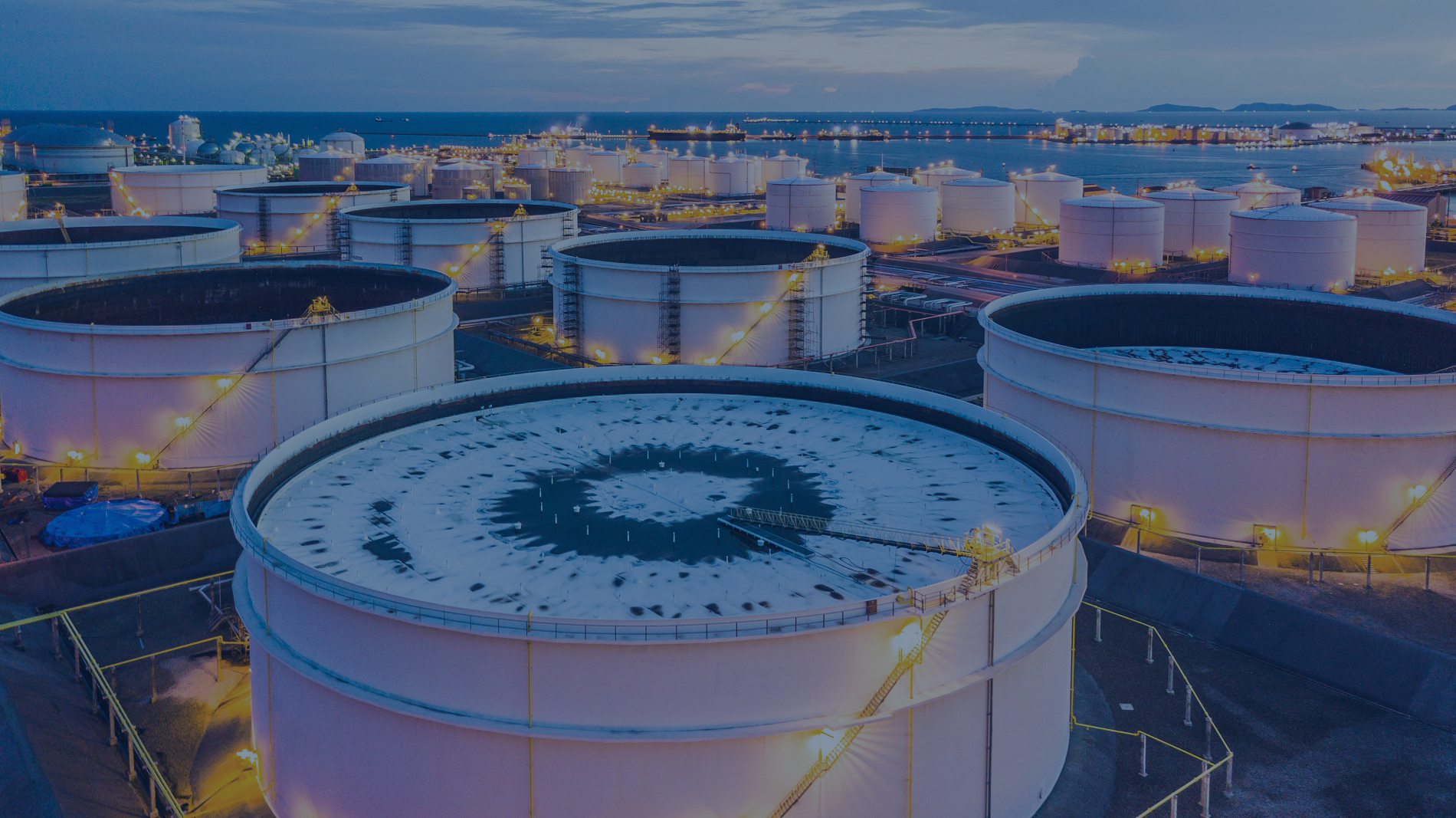
Magnetic Flux Leakage (MFL) in Warner, OK
From Warner, TechCorr mobilizes Magnetic Flux Leakage (MFL)—a non-destructive testing (NDT) method grounded in magnetic-field measurement—to storage-tank operators along the Arkoma Basin and mid-continent corridor. Our South Central crews help identify tank-floor corrosion while supporting safe, informed maintenance decisions.
Protecting tank floors across the South Central corridor
Storage tanks are essential to Oklahoma’s refining, pipeline, and terminal operations. Their floors can experience internal corrosion from stored products and water, as well as external corrosion where the underside contacts the foundation. Because much of this damage is hidden from routine visual checks, undetected wall loss can create leak risks, unplanned outages, and costly repairs.
For operators in Warner and the wider Arkoma Basin and mid-continent region, Magnetic Flux Leakage (MFL) provides a practical way to screen accessible tank-floor areas for corrosion without cutting or removing the plate. The resulting inspection information can help integrity teams prioritize follow-up examination and plan maintenance around operational needs. MFL supports asset integrity decisions; it does not replace the tank owner’s inspection program or the qualified inspector’s evaluation.
How Magnetic Flux Leakage works
MFL is a non-destructive testing and NDE method that uses magnetism to identify changes associated with metal loss. A scanner magnetizes the tank floor. Where corrosion or pitting has reduced the steel’s thickness, the magnetic field is disturbed; sensors measure those changes as the scanner travels over the plate in systematic passes.
The inspection system records indications across the scanned area and can present them in a mapped, often color-coded view of suspected wall loss. That map helps qualified personnel locate areas for review, compare findings with applicable acceptance criteria, and select locations for additional examination. MFL is a screening technique: signal interpretation depends on equipment, plate and surface conditions, scanner coverage, and qualified analysis. Where needed, complementary methods—such as ultrasonic thickness measurements—can help characterize or verify specific indications.
Preparation and coverage matter. Tank-floor condition, access, cleanliness, coatings, obstructions, and plate features can affect scanner performance and data quality. TechCorr coordinates scope and site requirements with the owner so the inspection approach, limitations, and reporting expectations are understood before work begins.
What TechCorr’s Warner team delivers
TechCorr’s Warner office supports Oklahoma pipeline and refining operators with pipeline NDE, conventional NDE, and rope access. For MFL tank-floor work, our team can coordinate mobilization, inspection planning, scanner coverage, data review, and clear reporting around the facility’s schedule and site requirements. Certified crews mobilize from Warner to serve assets across the Arkoma Basin and mid-continent, helping operators coordinate inspection work alongside other integrity needs.
Deliverables are intended to help plant managers and integrity engineers make practical next-step decisions. Depending on the agreed scope, reporting can document inspected areas, relevant limitations, mapped indications, and locations recommended for follow-up. The inspection findings can inform repair planning, additional examination, and fitness-for-service discussions led by the responsible owner and qualified engineering or inspection personnel. MFL results alone should not be treated as a guarantee that a tank is free of relevant damage.
Standards, qualifications, and responsible use
The applicable requirements depend on the asset, inspection purpose, jurisdiction, owner specifications, and inspection program. API 653 is the principal API standard for inspection, repair, alteration, and reconstruction of aboveground storage tanks; API 510 addresses pressure-vessel inspection, and API 570 applies to in-service piping inspection. They are relevant to broader facility integrity programs, but they are not interchangeable, and API 510 or API 570 should not be presented as the governing standard for tank-floor MFL simply because the work occurs at a refinery or pipeline facility.
MFL procedures and results should be managed within the applicable tank inspection scope, including relevant API 653 requirements and owner-defined criteria. Personnel qualification and oversight should align with the contract, procedure, and applicable code or employer program. ASNT-referenced qualification practices may inform NDT personnel qualification; the method, level, certification basis, and required supervision should be confirmed for the specific work rather than assumed from a general reference to ASNT.
NACE International and SSPC merged to form AMPP, whose corrosion-control resources may support an operator’s broader corrosion management program. ISO standards can also provide useful frameworks for quality, competence, and documented processes when adopted by the organization or specified by contract. No single standard automatically establishes acceptance criteria for every MFL application. TechCorr aligns inspection execution and reporting with the agreed scope and applicable requirements, and the owner’s responsible inspector determines how results fit the overall asset integrity assessment.
Why TechCorr Warner
TechCorr combines the Warner office’s regional mobilization capability with strengths in pipeline NDE, conventional NDE, and rope access. That mix is valuable when tank-floor findings need to be considered alongside related inspection priorities across a facility or pipeline operation. Our focus is on a clearly scoped examination, technically responsible interpretation, and useful documentation—not overstating what one method can establish.
Planning a tank-floor inspection in Warner, the Arkoma Basin, or the surrounding mid-continent corridor? Contact TechCorr to discuss tank condition, access, timing, inspection objectives, and the right MFL scope for your asset. We’ll help you coordinate a practical NDT plan that supports informed maintenance and inspection decisions.
Why Warner Chooses TechCorr for Magnetic Flux Leakage (MFL)
- Warner-based mobilization across the Arkoma Basin and mid-continent
- MFL mapped screening paired with practical NDE follow-up planning
- Pipeline, conventional NDE, and rope access capabilities
- Scope and reporting aligned with applicable tank inspection requirements